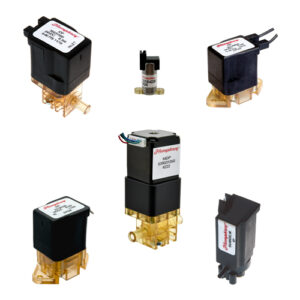

Role Played by Liquid Solenoid Valves in Dialysis Devices
Liquid solenoid valves are critical for precise fluid control in dialysis machines, which help promote patient safety and treatment efficacy. They’re used in clinical and home hemodialysis equipment to manage dialysate, blood and waste fluids. Learn how these innovative solutions can provide consistent flow control and optimize clinical applications to enhance patient wellness and satisfaction.
How Liquid Solenoid Valves Operate in Dialysis Equipment
Solenoid valves use an electromagnetic current to open or close the orifice in proportion to the amount of energy used during actuation. Dialysis devices use several liquid solenoid valves to direct, mix and filter pressurized media to the patient.
They create a controlled path through which blood travels to the cleaning system and back to the individual. Solenoid valves direct blood and waste fluids through separate circuits and control excess fluid removal to maintain fluid balance. The design prevents backflow, leaks and cross-contamination, which allows for thorough cleaning between treatments.
If the equipment malfunctions, the valve will redirect fluids away from the patient to prevent adverse side effects and discomfort.
Liquid Solenoid Valve Features
- Normally closed or open actuation
- Medical grade plastic or stainless steel composition
- 2- and 3-way configuration options
- Manifold mounting
- Servo valve driver
- FFKM premium elastomer
Benefits of Using a Liquid Solenoid Valve in Dialysis Devices
Isolated components: Contamination is dangerous to dialysis patients, so it’s crucial to maintain fluid differentiation and system integrity. Diaphragm isolation valves separate the solenoid operator from the controlled fluid, preventing contamination in the flow path and reducing the number of wetted parts.
Application diversity: Liquid solenoid valves can be used for inlet and outlet control on balance chambers and in dialysate mixing applications.
Patient safety: The precision design prevents inconsistent media pressure and flow during treatment, which could harm a patient. The valve will cease operation if there’s a problem with dialysate temperature, improper pH or air in the blood circuit.
Accessible home healthcare: Liquid solenoid valves provide a greater level of reliability that’s essential for home health equipment.
Durable design: Home dialysis occurs several times a week, which means the valves in the equipment must be able to withstand constant use. These valves feature biocompatible and chemically resistant materials that won’t degrade when exposed to different media.
Sanitation: Liquid solenoid valves are designed to open selected pathways to allow disinfectants through to complete rinse cycles and sanitation. Lines to the patient get blocked to prevent chemical interactions, and waste is directed out of the valve upon completion. That process primes the equipment for consistent treatment.
Integration with digital devices: These valves are suitable for fully automated systems for safe fluid control. They’re designed to work with embedded controls and real-time operating systems to provide feedback on media pressure, temperature and conductivity.
Necessities for Home Hemodialysis Equipment
Home hemodialysis (HHD) enables patients to receive treatments in the comfort and convenience of their homes. Besides the dialysis device, home hemodialysis requires a water purification system for mixing dialysate. Humphrey iDP valves have been used successfully on water purification systems, too.
Find Dialysis Equipment Valves at Humphrey Products
For more than 30 years, Humphrey has produced the iDP series of diaphragm isolation valves for water purification and aggressive media handling. Our valves were specifically developed for use in hemodialysis devices and are effective for cleaning flow paths between sessions. Contact us to learn more about our medical valves.