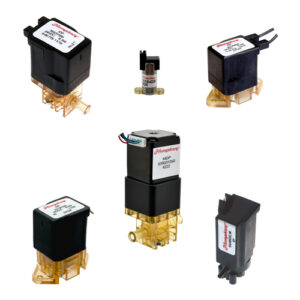

How Liquid and Pneumatic Solenoid Valves Support Device Reprocessing
Liquid and pneumatic solenoid valves in device reprocessing equipment provide precision flow management of cleaning agents, disinfectants and rinsing solutions used for sterilization. That ensures thorough sanitization while preventing cross-contamination between steps.
Sequential Fluid Direction: How It Works
These valves can work in tandem to deliver cleaning agents and compressed air to sterilize and dry equipment in medical applications. That’s crucial if your disinfecting process includes multiple phases to adhere to quality standards.
Here’s how they operate:
Cleaning: The liquid valve opens to direct enzymatic or alkaline cleaning solutions through device channels (lumens) to ensure complete surface contact.
Disinfection: Pneumatic valves deliver disinfectants like citric acid or formaldehyde at programmed intervals, maintaining chemical concentration for effective microbial disinfection.
Rinsing: Liquid valves modulate water flow to remove residual chemicals.
Drying: Pneumatic solenoid valves introduce clean, dry air or compatible inert gases to the lumens within the drying chamber to enhance cleanliness and productivity.
Liquid and Pneumatic Valve Features
Due to the repetitive nature of device reprocessing, liquid and pneumatic valves must be able to withstand continued use. They can handle millions of cycles without failing, allowing you to reduce operating and maintenance costs.
Additional features include:
- Fast actuation
- Compact design
- Precision flow control
- Corrosion and chemical resistance
- Temperature resistance
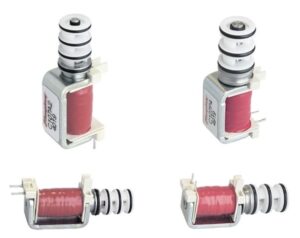
Humphrey’s iDP valve series is ideal for handling aggressive media, such as alkalines, enzymes and acids. Our product specs include the following:
- 2-, 3- and 4-way configuration
- Normally closed and diverter functions
- 12 and 24 VDC
- 171 Cv
- 3 LPM (water) and 220 LPM (air) flow capacity
Benefits of Using Liquid and Pneumatic Valves in Reprocessing Devices
Automated operation: You can incorporate liquid valves into programmable systems to automate cleaning cycles. That enhances efficiency, decreases handling requirements and prevents human error.
Efficient flow switching: Pneumatic and liquid valves make it easy to switch between cleaning stages and cut cycling time in high-demand applications.
Modular design: Because these valves have a small footprint, they can easily fit a variety of complex medical reprocessing equipment. That streamlines the number of moving parts in a system.
Energy efficiency: Pneumatic valves don’t require lots of electrical power to function, so they consume less energy than their motorized counterparts. Liquid valves feature a low internal volume to eliminate the need for long flushing cycles. That decreases the amount of wastewater generated during each phase.
Efficient Device Reprocessing with Humphrey’s iDP Valve Series
Humphrey’s iDP series of valves has a long history of optimizing device reprocessing, including endoscopes and dialysis filters. Our high-flow iDP family of valves enables rapid fluid distribution to accelerate debris removal, reducing cycle time by up to 30%.
These valves incorporate a diaphragm isolation design that separates the aggressive cleaning fluids from other components, such as the solenoid operator. The iDP valves feature a Radel™ body and EPDM, Viton GF or FFKM diaphragm seal, which are the only wetted parts within the flow path to support reliability and compatibility with the cleaning fluids.
Discover Innovative Medical Device Reprocessing Solutions from Humphrey Products
We’ve spent decades becoming the experts on valves for device reprocessing. Our expert team specializes in custom valve solutions for various equipment to promote patient safety. Our iDP valves feature a compact design, low leak rate and reduced power consumption to optimize your application. Contact our technical team for more information and quotes.