

Considerations in Selecting Pneumatic Directional Control Valves
The selection of pneumatic directional control valves begins with an understanding of the role it will play in a system, whether that’s operating an air cylinder, piloting another valve or filling a specific volume within a period of time.
You must begin with a flow capacity calculation. That’s derived from the downstream volume that’s filled at a prescribed pressure and within a specific time. Other considerations include the directional control valve type, such as 2-, 3- or 4-way functions, pressure drop upon actuation and the cleanliness and temperature of the immediate environment.
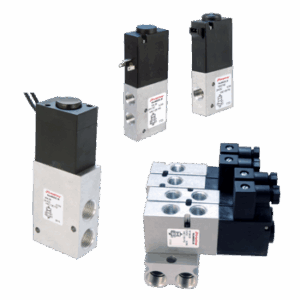
Key Considerations in Sizing Pneumatic Directional Control Valves
This type of valve regulates and guides the flow of compressed air through a pneumatic system. Depending on the number of ports and function, pneumatic directional control valves determine where air moves.
Sizing a pneumatic directional control valve correctly supports reliable performance and longer service life. You can also reduce the risk of wasted energy and resources that may occur when using an undersized or oversized valve. Optimized performance contributes to safer operations, lower costs and reduced liability, so your team can work efficiently and securely.
Understanding Valve Sizing
Valve sizing is the process of selecting a pneumatic directional control valve based on the application’s requirements and the component’s capabilities. Taking the time to choose the correct valve allows an actuator to receive the necessary amount of compressed air at the right pressure within a required period.
The following consequences can occur due to improper valve selection:
Undersized: If a valve is too small, not enough air can pass through the pneumatic system appropriately. That slows down actuators, places increased strain on other parts and may cause hazardous malfunctions.
Oversized: Installing a grossly oversized valve in a pneumatic application can result in jerky actuator movements and waste compressed air. They’re also more expensive and can take up unnecessary space.
Marginally oversized valves are acceptable. Most valve manufacturers offer a limited number of valve sizes, so opting for the next size up is often the best choice.
Key Factors in Valve Sizing
Flow requirements: Flow rate is directly impacted by cylinder size, actuator stroke and cycle rate. Your valve must be able to deliver enough air volume to fill the chamber within a cycle period. Correspondingly, the valve must vent or exhaust the volume as well. The most common means for calculating flow are standard cubic feet per minute and liters per minute.
Operating pressure: Your system’s pressure variations dictate the maximum and minimum capacities your valve will deliver. Higher pressure means more air will be pushed through the valve within the same period.
Actuator characteristics: The actuator’s bore, stroke, operating pressure and required cycling speed in the application will determine your valve selection. If the valve’s flow capacity can’t meet those requirements, the actuator will not perform correctly.
Valve flow: The most common flow rates published by valve manufacturers are cubic feet per minute and liters per minute, both at a specific pressure. As a means of comparison, manufacturers publish Cv or Kv values. Cv measures the flow of media through a system with a one psi pressure drop. Kv measures the flow of media with a one bar pressure drop. Some industries prefer the use of valve orifice size to determine valve flow capacity. Once you’ve calculated your system’s air flow demands, you can identify the flow rate and select a valve with greater capacity than needed.
Valve Port Size vs. Flow Capacity
It’s a common assumption that a larger threaded piping port provides a higher flow rate, but valves with the same threaded port size can actually have different Cv or Kv values. Flow path, valve stroke length and orifice diameter determine flow capacity.
System Response Time
The rate at which compressed air fills the downstream volume and overcomes the opposing forces determines the speed of the pneumatic actuator. The smaller the valve flow capacity, the slower the actuator moves, which could lead to system failure. An oversized valve can lead to faster movement but instability as well. Selecting the right-sized valve allows for complete strokes and controllable motion.
Air Supply and Piping Considerations
The amount of air supplied to a pneumatic directional control valve affects how much compressed media the downstream system can provide. Upstream piping permits the necessary input, while the downstream counterpart must be large enough to carry the flow without decreasing pressure. The inside diameter of an upstream pipe fitting must be similar to the valve port size to deliver maximum flow.
Environmental and Operational Conditions
Ambient conditions, including temperature and contamination, will impact how a valve performs. Low temperatures can stiffen seals and thicken lubricants, while excess heat causes component expansion and degradation. Moisture, dust and oil can enter the valve and clog the flow path, so it’s important to assess ambient operating conditions during your directional control valve selection process. It’s also important to consider valve construction based on operating conditions. For instance, a poppet valve will exhibit far superior operation in wet or contaminated air line conditions than a sliding spool valve.
Directional Control Valves for Pneumatic Systems from Humphrey Products
If you’re unsure how to begin your search for the right pneumatic directional control valve, contact the team for technical support at Humphrey Products.
Try out our Valve Sizing Calculator or browse our product catalog and reach out for technical support. We offer a variety of pneumatic solutions that can optimize your application.