

Types of Applications for Microfluidics Components
Microfluidic technology is driving innovation in healthcare, pharmaceuticals and other industries that rely on controlling small volumes of fluid. These components can move microliters and picoliters within nearly microscopic channels, making them ideal for miniaturized lab equipment. They offer more precise fluid handling, supporting cost-effective operations and reducing overall expenses. Discover how microfluidics works and explore the common types of applications.
Biomedical and Life Sciences
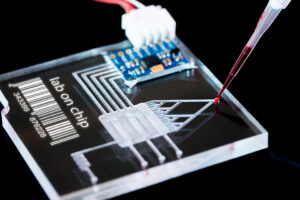
Microfluidics components allow for precision handling of cells, DNA proteins and chemical reactions. They’re suitable for point-of-care diagnostics like lab-on-chip devices for rapid testing using blood and saliva. Microfluidics is also used in cell culture and analysis to study samples in a controlled environment and track growth. PCR-on-a-chip uses microfluidics components for genetic testing and protein separation. You can also optimize drug delivery systems and insulin pumps.
Drug Discovery and Development
The miniature design allows for high-throughput screening of drug compounds on a chip. That’s essential for research and development when using organ-on-a-chip to simulate heart, lung and liver tissue to test for side effects without using animal subjects. You can deliver targeted drug releases and microdoses with ease using microfluidic components, too.
Diagnostics and Healthcare
When used in blood analyses such as hematology, blood typing and coagulation testing, microfluidics separate, count and mix samples with reagents. They can also be used in immunoassays for antibody detection after infection or vaccination. Pathogen tests rely on these components to isolate and concentrate pathogens from fluids, which is crucial for portable diagnostic testing. Skin-mounted microfluidic patches collect fluid samples and channel them into microscopic sensors for non-invasive monitoring.
Chemical and Industrial Applications
Microfluidics has the potential to revolutionize chemical engineering and industrial applications. They regulate miniature chemical reactions and introduce and mix reagents under controlled conditions. That’s important if you want to use continuous-flow synthesis instead of batch processing. The minute design also allows for exact mixing, dosing and separation, which minimizes product waste. Fuel cells in portable energy systems also need microfluidics components that use laminar flow to channel hydrogen and formic acid.
Environmental Monitoring
When used in water quality testing, microfluidics concentrate trace contaminants, making for faster detection applications. You’ll also find these components in air quality monitoring equipment, as they can trap and separate airborne particles with ease. That makes microfluidics more cost-efficient than bulkier equipment. Processing food samples for bacterial contamination is a suitable application, too, because the pathogen detection properties allow for multiple assessments in a single test.
Research Tools
Analytical chemistry requires miniaturized techniques like liquid chromatography to separate fluids through microchannels. Microfluidics promotes faster filtering and reduces reagent waste. They’re effective for handling fluid dynamics at microscale in diagnostic chips and microreactors. You can test cells and biomolecules in a controlled environment and encapsulate single cells and DNA and test multiple variations at the same time.
Emerging Applications
The flexibility provided by microfluidics components makes them ideal for innovation in emerging applications like 3D biometric printing and space exploration. They can be used in nozzles to control the flow of biolinks in 3D printing and simulate tissue samples. Lab-on-chip devices can replace bulky equipment, which is necessary in aircraft and other applications with limited space.
Components of Microfluidics and Their Functions
Microfluidics operates in a system of chambers that direct, mix and filter media according to application specifications. Here’s how they work:
Channels: These chambers are molded into glass, silicon or polymers to provide pathways for fluid transportation. They’re designed with specific geometries to regulate flow, mixing and separation.
Pumps: Pumps generate the energy needed to move fluid through each channel. There are a variety of pumps used in microfluidics, including syringe, peristaltic, electroosmotic and pneumatic.
Valves: Depending on the application, valves can start, stop and redirect media flow. They’re also effective for controlling timing and isolating samples.
Mixers: It can be difficult to properly blend fluids at a microscopic level, so mixers are crucial. They come in zigzag channels and herringbone structures that allow for passive function. Magnetic, acoustic and electrokinetic styles are designed for active operation.
Separators: These components serve as filters that separate cells, particles, droplets and molecules from the fluid stream. That can be done using membrane filters, hydrodynamic separation or dielectrophoretic methods.
Droplet generators: With droplet generators, you can create controlled microdroplets and emulsions via flow-focusing, co-flow geometries and T-junctions.
Sensors: Sensors are used to measure chemical and biological fluid properties such as pH levels and cell activity.
Temperature controllers: Thermal conditions can directly alter the effectiveness of microfluidics. Heaters maintain the right conditions via integrated sensors to regulate ambient temperature.
Interfaces: The inlets and outlets connect chambers, channels and reservoirs to introduce and collect fluids.
Software: You can use integrated and external control systems in microfluidics applications to coordinate valves, pumps, sensors and detectors to enhance automation efficiency.
Custom Valve Solution from Humphrey Products
Selecting the right valve can be tricky, especially if you want to get the most from your investment. The expert team at Humphrey Products can help you define your application requirements and provide the product you need to get the job done.
Browse our product catalog and contact our technical team for assistance.